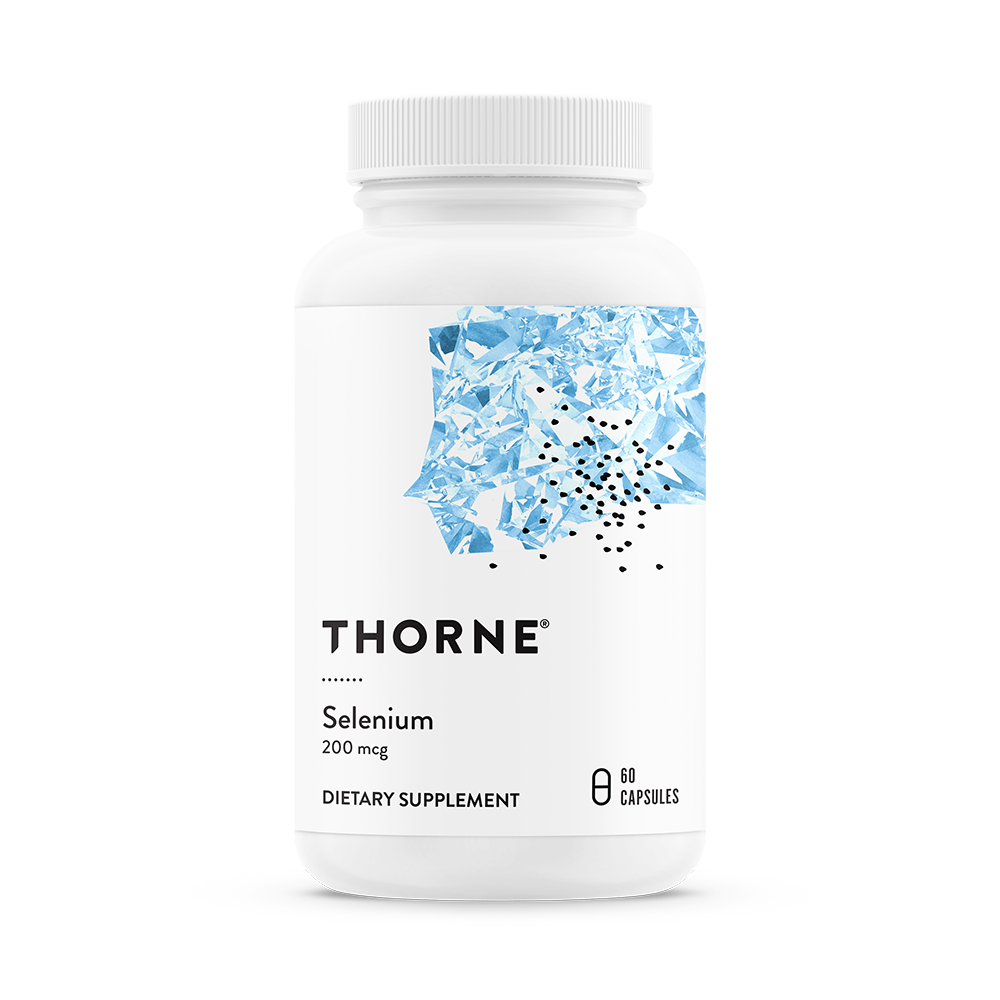
Selenium 60 caps previously Selenomethionine M225 Selenium previously Selenomethionine Warnings – ALLERGY WARNING – This product is contraindicated in an individual with a history of hypersensitivity to any of its ingredients. PREGNANCY WARNING If pregnant, consult your health professional before using this product. INTERACTIONS There are no known adverse interactions or contraindications at publication date. Key Ingredients Selenium Ingredient Amounts Serving Size: 1 Capsules Servings Per Container: 60 Name Amount Selenium (Selenomethionine) 200mcg Other Ingredients: Hypromellose Capsule, Microcrystalline Cellulose Thorne Verified Derived From Natural Flavors Derived From Natural Colors Gluten Free Dairy Free Soy Free Contact us for a Naturopathic consultation. ___________________________________________________________________________________ See Medical World News Selenium is a trace element, or nutrient, that humans need to stay healthy. It plays a role in many bodily processes, including: reproduction the function of the thyroid gland production of DNA protecting the body from free radicals, which are unstable cells that move around the body and can increase the risk of diseases, including cancer protecting the body from infection Why do we need it? The amount of selenium people need depends on their age. Other factors include whether they are pregnant, or if they are breastfeeding. According to the National Institutes of Health (NIH), the recommended daily amountsTrusted Source are: birth to 6 months: 15 micrograms (mcg) infants 7–12 months: 20 mcg children 1–3 years: 20 mcg children 4–8 years: 30 mcg children 9–13 years: 40 mcg teenagers 14–18 years: 55 mcg adults: 55 mcg a person who is pregnant: 60 mcg a person who is breastfeeding: 70 mcg Selenium deficiency is rare in the United States. However, it can happen, and can lead to: Keshan disease, which is a type of heart disease infertility in men Kashin-Beck disease, which is a type of arthritis that affects the joints Scientists are currently investigatinglinks between selenium deficiencies and: cancer cardiovascular disease cognitive decline, which includes problems with memory, problem-solving, and concentration cardiovascular disease thyroid disease Risks of too much It is worth noting that too much selenium can be harmful. Over time, it can lead to: bad breath nausea diarrhea rashes irritability a metallic taste in the mouth discoloration of the teeth brittle hair and nails hair loss The upper limit of selenium also depends on a person’s age. The NIH offers the following advice: birth to 6 months: no more than 45 mcg per day infants 7–12 months: no more than 60 mcg per day children 1–3 years: no more than 90 mcg per day children 4–8 years: no more than 150 mcg per day children 9–13 years: no more than 280 mcg per day teenagers 14 and older, and adults: no more than 400 mcg per day